Choose Your AI Adventure
Every project follows the SENSE → THINK → DECIDE → ACT framework. Start from the top and grow at your own pace.

Sensor Data Logger & Pattern Analyzer
Collect real-world data from sensors and observe patterns over time. Understand how machines gather and interpret information before learning.

Decision Tree Logic Machine
Build a multi-condition logic system using layered decision rules — the foundation of structured computational thinking and ML models.

MakerDost Bot — Motion Foundations
Build your first programmable robot and master structured movement logic. Watch your decision-tree thinking come alive in a physical machine.

Smart Traffic Intelligence System
Design a rule-based traffic automation system using structured logic and multiple sensor inputs — your first multi-input AI system.
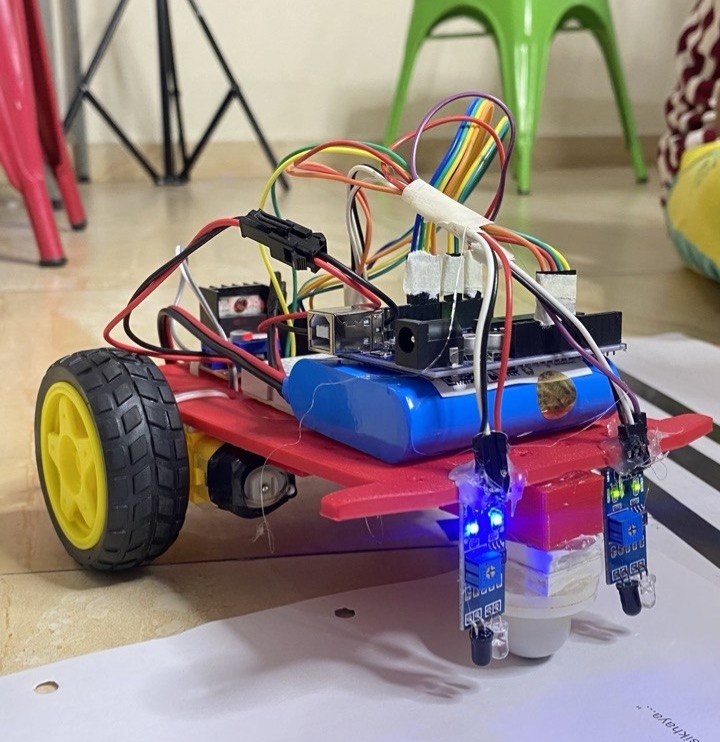
Intelligent Line Tracking Rover
Create a rover that follows a path using real-time sensor feedback — the foundation of all autonomous navigation systems.

Autonomous Obstacle Navigation Rover
Build a robot that detects and avoids obstacles independently — making real-time decisions without any human input.

Competitive Object Delivery Rover
Design a rover with precision object placement for school competitions — combining navigation, avoidance and delivery into one system.

Vision-Based Object Recognition Rover
Train a simple AI model using custom data and connect predictions to robotic movement in real time — where robotics meets machine learning.

AI Gesture Control System
Collect gesture data, train a model, and control your robot using real-time AI-based gesture recognition — the ultimate project.